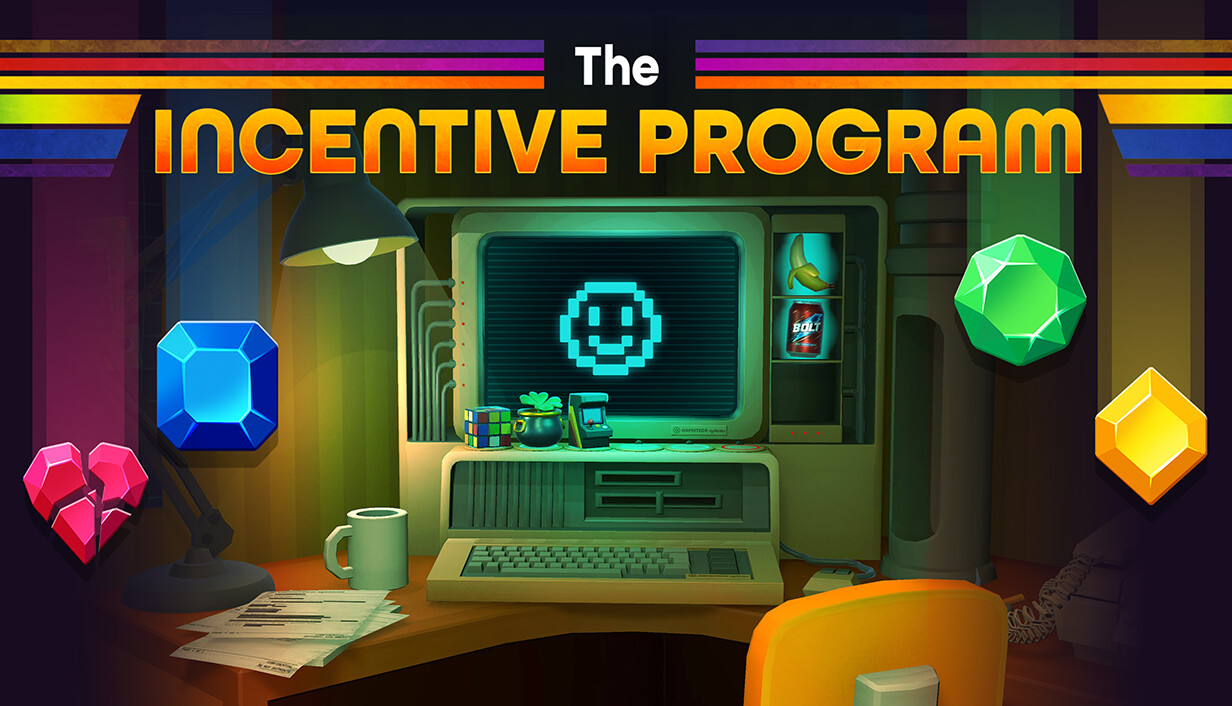
The premise of The Incentive Program is that you are being paid to play a match-3 game inside a surreal corporate nightmare. You aren’t actually being paid in real life to play, and victory is not guaranteed. You have to manipulate the odds, exploit the rules, and find a way to escape the program. That setup sounds like something from a weird indie short film, and the game wears it very well. This is Outplay’s first Steam release, and based on the demo alone, it’s one of the more interesting match-3 roguelikes to come along in a while. I thoroughly enjoyed my time with this game, so much so that I didn’t even start writing my review until I finally managed to get a broken combo that led to a victory.
The comparison to Balatro is the fastest shorthand I could think of. If Balatro took poker and rebuilt it into a roguelike scoring system, then The Incentive Program did the same thing, but with the Candy Crush or Bejewelled style match-3 system. The familiar candy-crush-adjacent systems are still here: you match colors, chain combos, and clear the board to try getting a high score. Layered on top of that system, however, is a set of trinkets, modifiers, and move economics that turn every run into a puzzle of how to engineer your board into a state that allows you to hit an increasingly difficult quota each round.
The Moment It All Matched Into Place
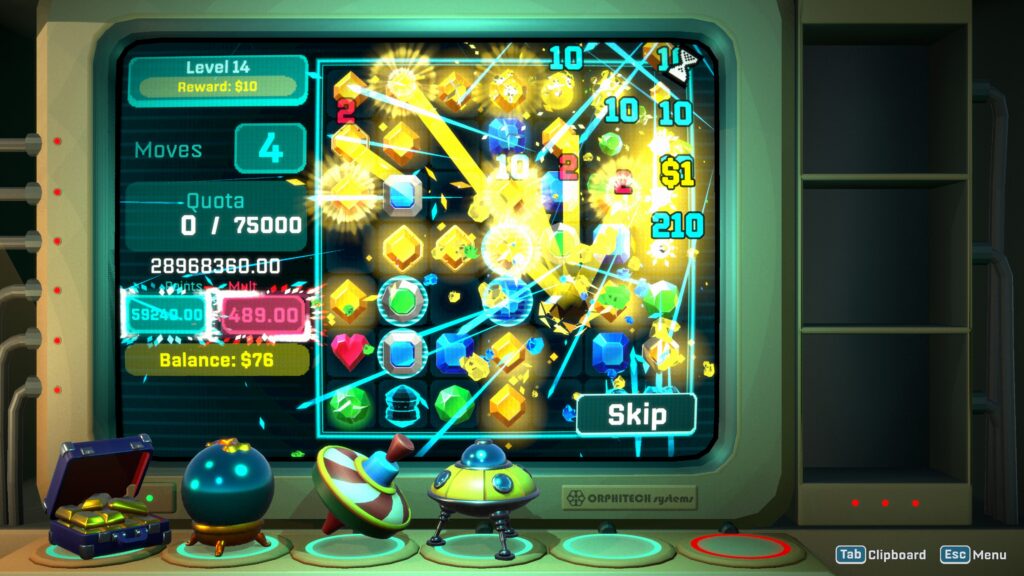
For the first two hours, I was losing. Constantly losing. The RNG felt super unfair at times, and I even noted that down while playing. Certain modifier combinations just didn’t work, and getting a bad draw early could put you on a path where no amount of skill can even correct it. I was on the verge of writing this off as too punishing when I stumbled into a run where I managed to eliminate red, green, and purple gems from my board entirely, leaving only blue and yellow tiles. On top of this, I managed to get a trinket that granted money every time I played a yellow move, and enough gem buffs to make every other gem explode, causing another trinket to multiply my score by 0.1x each time an explosion occurred.
The rest of that match was one of the most satisfying experiences I’ve had in a demo for a while now. With only two colors on the board and an infinite money loop building from the yellow trinket, I was generating hundreds of in-game balance per turn and had enough money to re-roll my vending machine indefinitely. The game went from “this is punishing” to “I have broken this, and now I want more.” It’s the exact feeling a roguelike of this type is supposed to deliver, and the demo delivered it heavily. I just wish there were an infinite mode.
What The Demo Does Well
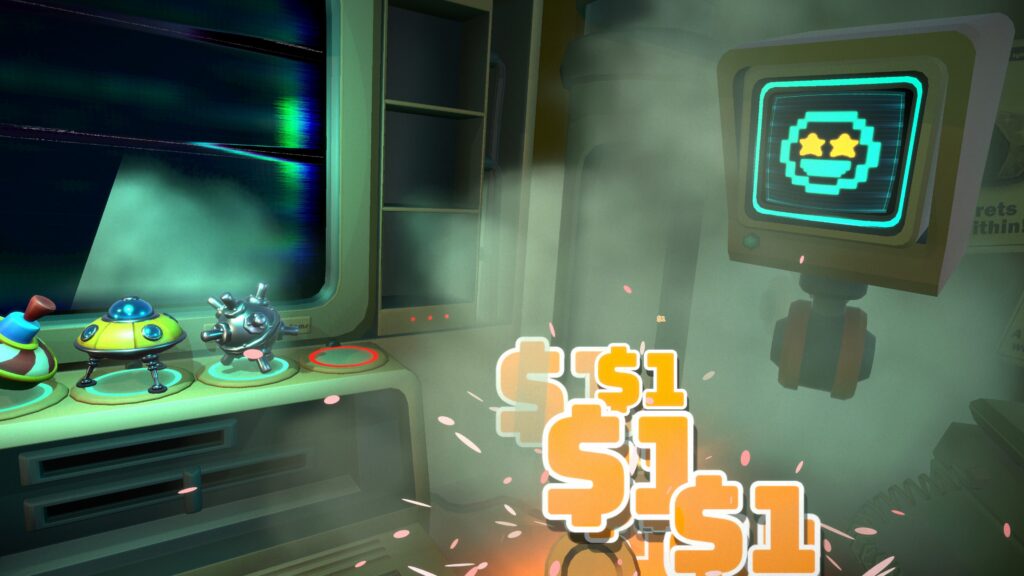
The aesthetics are genuinely good for this game; it’s a clean, corporate, slightly sinister, surreal design that matches well with the office desk aesthetic. It reminds me of the vibe that Macrodata Refinement in Severance gives. The computer screen has great visual clarity, which a lot of games can struggle with, especially when it comes to trinkets being scattered on your screen. Sure, it may feel slightly cluttered, taking over some tiny space at the bottom of your monitor, but it matches the real-world desk clutter experience you would probably see with figures around your room. The modifier system has real depth, and the secrets scattered throughout the demo reward players who actually read what everything does rather than clicking through menus.
Achievements in a demo are something worth calling out specifically because it’s not common and it genuinely adds to the experience. Having goals to work toward beyond just “try to win” gives structure to early runs before the broader system has fully clicked, and it signals that the developer is taking the demo seriously as a standalone piece of content rather than just a marketing slice.
The Rough Edges
There’s a bug where the audio maxes out at the start of every run. It’s something where when I tried to lower the audio while in the main menu, each exit of the settings panel would reset the audio to the maximum. It’s a bug that probably should have been caught before the demo went live. One of the things you would say is annoying, not quite deal-breaking, but still the kind of issue that makes a game harder to settle into when you’re trying to focus on getting a great starter run.
The Random Modifier option is also frustrating in a small but very fixable way: when you select a random modifier, you don’t get told what it randomized to. For a game built around knowing your board state and planning moves accordingly, being handed an unknown variable with no disclosure feels like it’s working against the design rather than adding interesting unpredictability. Just tell me what I got. Was it mega gems, gold gems, or explosive gems? I won’t know unless I’m looking back and forth at my stats every second.
The AI Art Question
This one needs to be addressed directly because it came up in my head during play: some of the consumable bag images in the vending machine have a visual quality and a font style that reads as AI-generated. It’s the kind of aesthetic that would show up if you asked ChatGPT to generate an informational image. It adds a slightly uncanny composition to the game, and while I understand that vibe can actually clash well with a corporate sinister aesthetic, it just feels off. The Steam page also has no disclaimer or disclosure about AI usage in the artwork.
To be fair, it could be a stylistic choice rather than generative AI. Some deliberate art directions land in that same visual territory. But if you’re someone who cares about this issue, the uncertainty is worth flagging rather than glossing over. Luckily, the gameplay itself has nothing to do with it either way, as the match-3 system and the roguelike design are clearly the work of people who understand both genres instead of that of a prompt engineer. But the consumable art is a genuine question mark that the developer could clear up with a simple statement, and the absence of one leaves room for reasonable skepticism.
Lagback Verdict
If Balatro and Candy Crush had a baby inside a corporate nightmare and that baby had secrets, it would probably be The Incentive Program. The demo is free, has achievements, and has more replayability than most full releases, which is a genuinely impressive thing to say about something you haven’t paid a cent for. There are small bugs and a couple of clarity issues that could use attention before the full release, and the AI art question is worth a direct response from the developer. But none of that changes the fact that the match-3 system at the core of this is genuinely fun, and when a run finally clicks after hours of losing, it really clicks. I would say you have nothing to lose by giving it a shot.