Content Warning: Interdimensional Vending Machine contains body horror, gore, disturbing food imagery, depictions of starvation, death, anorexia, alcoholism, and edible insects. This review does not include screenshots of the game’s more disturbing content out of respect for readers who may be sensitive to it.
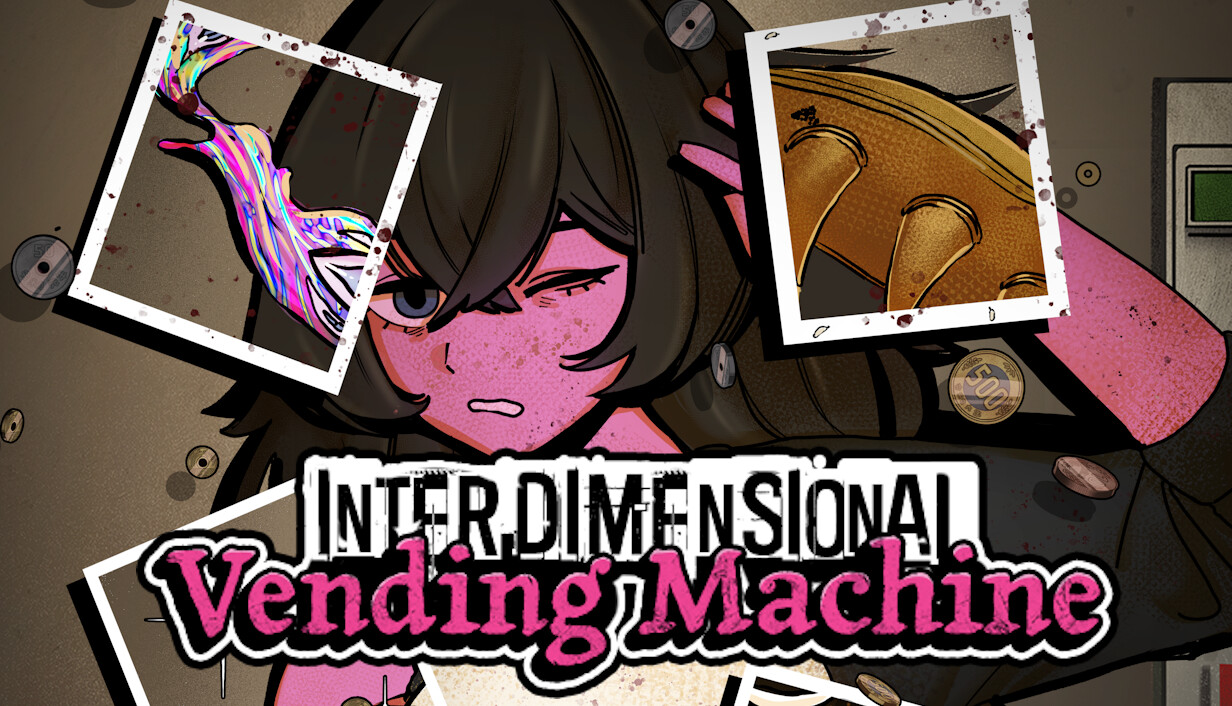
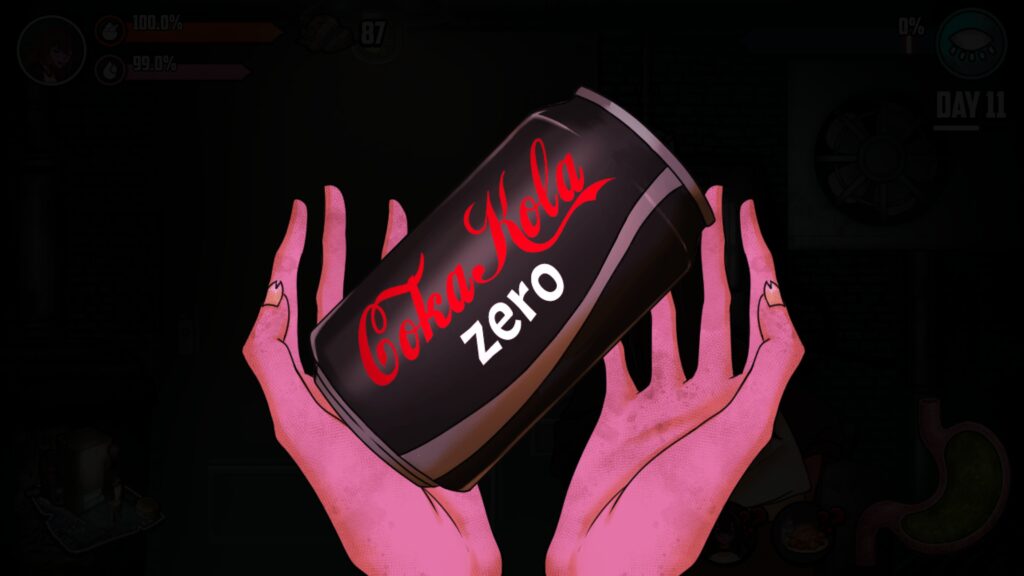
Interdimensional Vending Machine is a game inspired by SCP-261, which is described as a vending machine that accepts coins and dispenses food and drinks from other dimensions, realities, and points in time. If you know what an SCP is, you already have a very clear picture of whether this game is for you. If you don’t, let’s state the premise of this game as this: You play as a homeless girl surviving on the streets of a distorted reality-warped city. Your only food source is a vending machine that shouldn’t exist. Every coin you beg for can result in something different from this Vending Machine. Sometimes it’s food, sometimes it’s apple seeds, sometimes it’s some centipede-infested dish.
That concept alone is enough to make this game worth talking about. It’s genuinely strange, clearly made with a specific vision in mind, and wears its Newgrounds-era aesthetic like a badge of honor. I’ll be honest here, but I don’t usually seek out these types of games, and yet I still found myself interested enough to play through it, which is probably the clearest endorsement I can give of what the game is doing on a purely atmospheric level.
If This is Your Kind of Thing, Here’s Why it Works
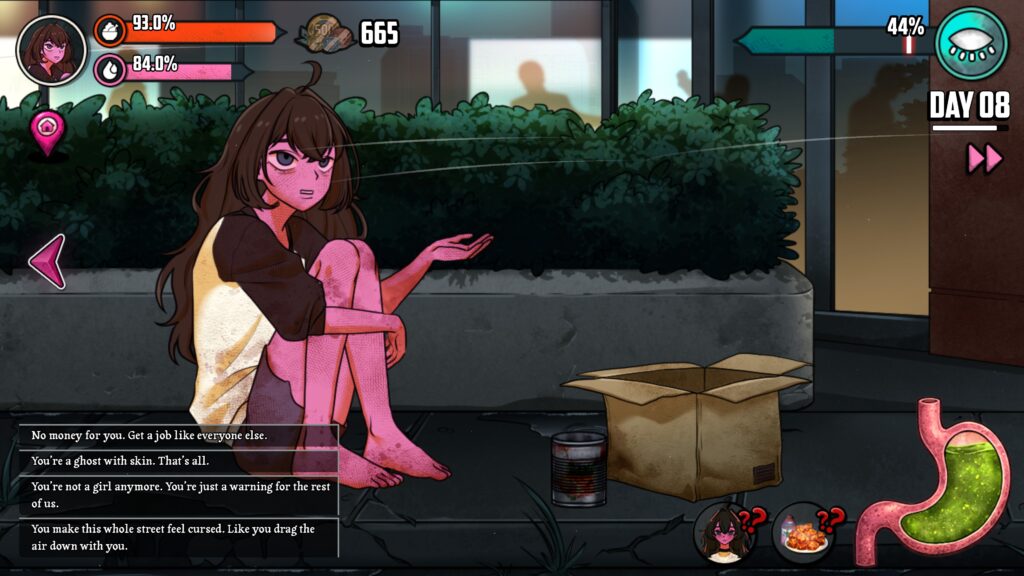
The art is the headline for this title. Interdimensional Vending Machine has a distinct visual style that you don’t see too often. A hand-drawn, slightly grotesque, immediately recognizable, unique, and creative game visually. The character designs, the transformation visuals, the way the city opens up as you progress, allowing you to see how the nearby strangers and animals have also been starved, it all feels deliberately crafted rather than thrown together quickly. For players who grew up on that early indie game aesthetic of the 2000s, where you expected a vast list of different styles, this is something that feels like a nostalgia game in the art department.
The transformation system is the other draw. What you eat slowly changes what your character becomes, and the range of outcomes is genuinely varied. Some transformations lean towards something pretty cute-looking, such as being able to essentially turn yourself into a cat girl that you probably didn’t expect to be able to play as, or even into a “regal” looking version of yourself. Other transformations lean hard into the world of malformed, Fallout-creature types of monsters, such as turning into a giant blob of eyes, guys, and mouths. It adds to the layer of mystery the game has. Not only are you figuring out what each money value gives you from the machine, but you’re also figuring out what transformations the things you eat and feed others create. Collecting every transformation and seeing what the machine produces next is the actual hook, and for players in that headspace, it’s really compelling to continue playing.
For achievement hunters as well, achievements come pretty quickly, which makes the game satisfying to play in shorter bursts without feeling like you’re grinding for progress. Sure, you’ll probably have some moments where you don’t get some achievements, mainly later on, but early on they pop like wildfire. At $7.99, the price also positions it correctly; this is a curiosity and horror vibes game, a thing you play to see what it does, and it’s priced accordingly.
If This Isn’t Your Usual Thing, Here’s What to Know
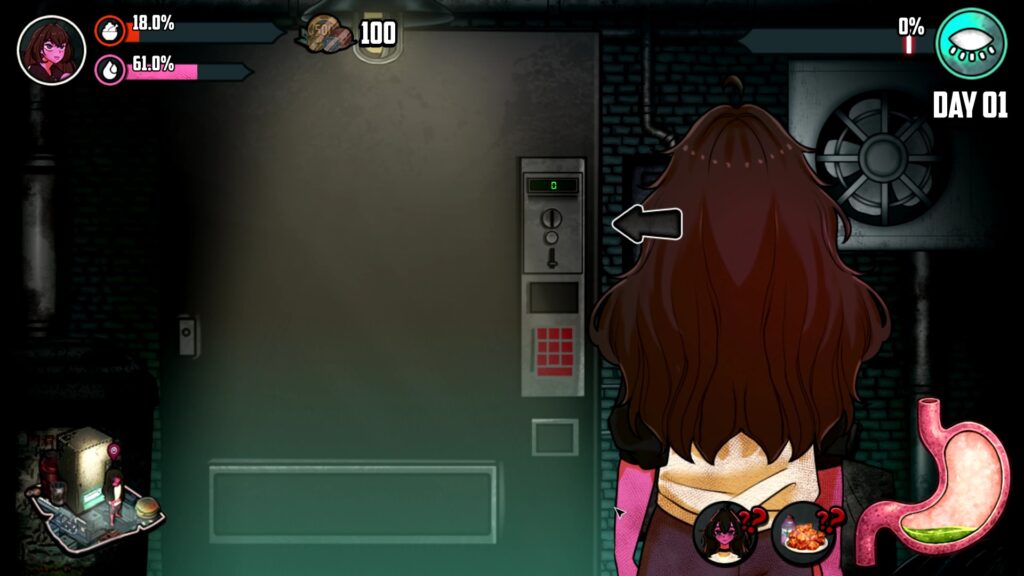
The survival loop has less mechanical depth than I initially expected. The hunger and thirst system feels consequential at first. Typically, from these types of games, you expect that if those values hit 0%, you’ll suffer for it, but the consequences don’t really seem to be anything. You can’t exactly die. Instead, it’s more of an aesthetic thing; running out of food doesn’t end a run, but instead it changes how your character looks and how the passersby talk about your appearance. It means that there’s no real way to lose the game, causing the stakes you expected this game’s presentation to set up to not really be there in the end.
Similarly, if a run isn’t going the way you want, such as if your mutations are heading in a direction you don’t like, you can return to the apartment and reset your transformation progress with a single button press. It’s very convenient, and it removes the frustration of messing up a specific transformation, but it also removes any sense that your choices have lasting consequences. The game has the atmosphere of a game where decisions matter without the mechanical weight to back it up.
There’s no overarching story structure to follow from beginning to end, and the gameplay loop, begging for coins, buying from the machine, eating, watching what changes, doesn’t evolve significantly over time. You’ll have witnessed all the game has to offer early on, and if you want to keep playing, it’s going to be because you want to see more transformations and more vending machine outputs, not because any gameplay mechanic is pulling you further.
Lagback Verdict
The selling point is the art, the transformations, and the feeling of finding an early Newgrounds game that somehow got more polished and stranger at the same time. That’s a very specific thing to want, and if you really want it, this is going to deliver that. All in all, Interdimensional Vending Machine is a genuinely interesting concept executed with strong art and a very clear creative vision. If you like SCP lore, body horror aesthetics, and the particular charm of Newgrounds-era surrealism, this is a solid pickup at $7.99. If you want challenge, consequence, or a story to follow from one end to the other, it’s probably not going to hold you. The vending machine is the experience. Whether that’s enough is the only question worth asking yourself before you buy.