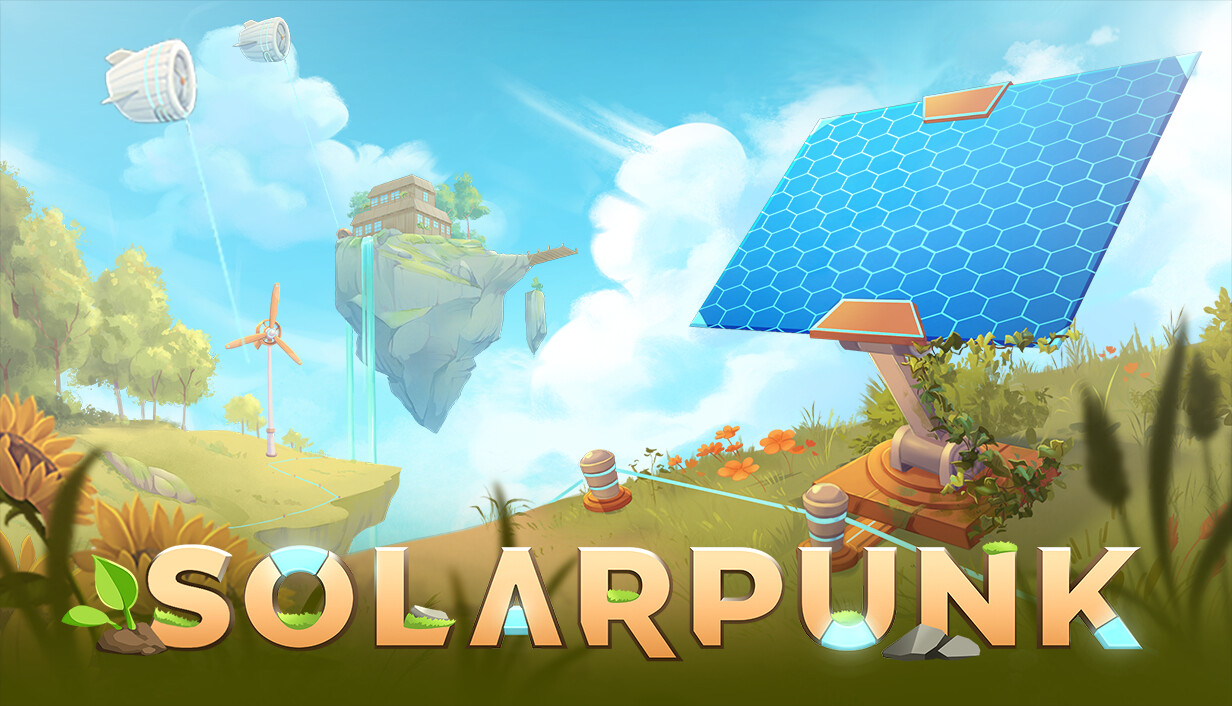
Solarpunk is the result of two developers spending four years building a dream. Cyberwave, a two-person studio based in Germany, Kickstarted the game back in 2023, raised €305,266 in pledges (~$353,177.50 USD) from more than 6,000 backers, hit a million wishlists on Steam, and finally released on June 8th. It’s always an exciting story to see small dev teams releasing games they clearly made with a lot of care and charm, and Solarpunk is no exception to that. From the floating sky islands to renewable energy systems, the game carries the type of quality and care you’d expect from a team that cared about what they were making, and it’s evident within the first few minutes of playing.
What’s harder to say within those first few minutes is what you’re actually supposed to be doing. Solarpunk is very upfront about this, even on the store page, explaining that there is no story, no questline, and no competitive pressure. Simply put, you exist on floating sky islands, you build things, you grow food, you explore a little bit, and eventually you find the perfect space to make your own. If that description sounds appealing to you on paper, it probably will be. If you need something pulling you forward before the loop opens up to you, though, the early hours are going to feel emptier than the game probably intends itself to be.
What Solarpunk Gets Right
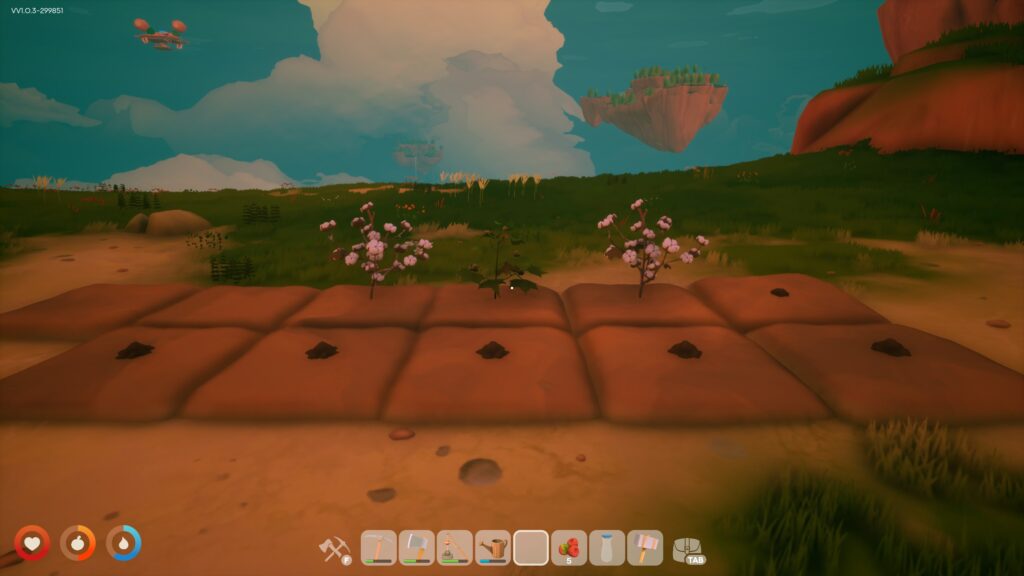
The aesthetic is a lovely concept. You have floating islands, something that you don’t see done too often outside of experiences like Skyblock in Minecraft. You also have renewable energy systems, crops growing in real time, airships you build to travel between biomes, and a coherent vision running through the whole thing. The weather interacting with the world in meaningful ways is one of those details that would be easy to miss but makes the game feel alive in ways I didn’t expect. For example, rain actually waters your crops, which means you’re not just farming, going back and forth with a watering bucket, but you have a dynamic system in play that can change how systems like farming even work. It’s a kind of systemic thinking that itches the Factorio side of the brain, rather than just feeling like a visually cosmetic system.
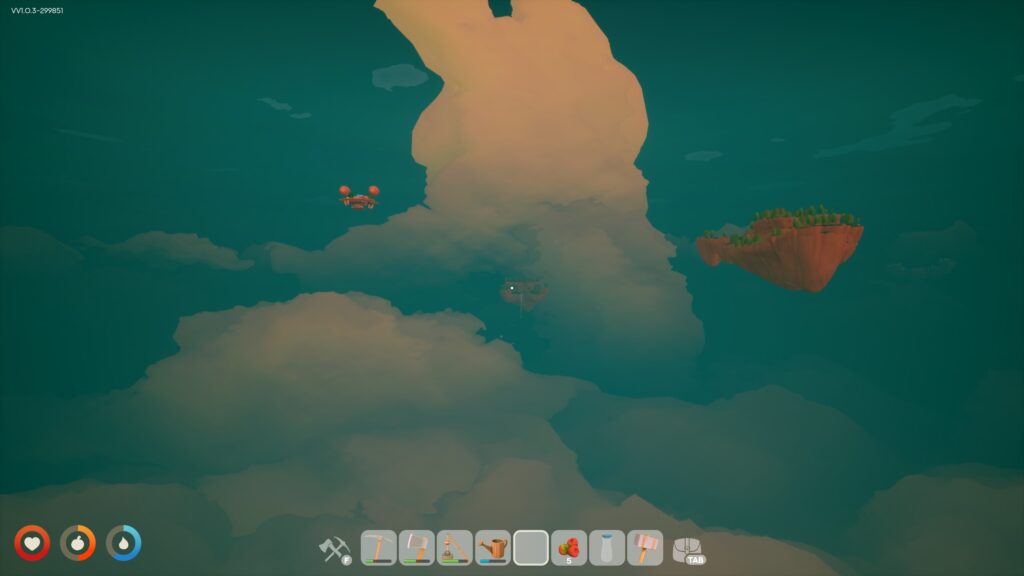
The building system also has real depth for players who want to get into it. You can be very simplistic as always in these types of games, by making a square box to live inside of, but if you’re into aesthetics, you can also make a home that looks more like something you’d see coming out of The Sims or Paralives. Sure, it might not hit the same level of customization, but it has a shockingly detailed amount of it. That side of Solarpunk is where the long-term value lives, and for the right player, it’s going to be exactly what they’re looking for to keep them engaged long term.
Personally, I played it on a screen share to my friends while just talking, using it as ambient company rather than focusing entirely on the solo experience, and it hit a calming sweet spot for me. It filled the same role as a game like Webfishing for me, where something happens on screen that’s calming, slightly social, and doesn’t demand your full attention all the time.
The Early Game Problem
Here’s where this review gets slightly complicated. The first few hours of Solarpunk Solo are genuinely slow in a way that tips from “relaxed gameplay” to “empty gameplay”. As mentioned before, there’s no questline to really guide you, but the absence of structure in the opening stretch means you spend a lot of time running around a small starter island while trying to figure out what you could do to progress during the wait for your first crops to grow. The game has a progression system with upgrades to work towards, new recipes to unlock, and things to craft, but opening up the opportunities a player should have is going to require a lot of early-game waiting. It’s not that you don’t have freedom to do anything either, but instead you just feel restricted early on before you can get to that point where the loop truly opens up for you. It’s like someone telling you to just trust them that some type of media “gets better 20 episodes in”. It’ll be worth the payoff for some, but it’ll be a turnoff for others.
Character customization is there in this game, but it’s also very minimal, and since you spend most of your time in first-person, it won’t matter too much in solo. The game’s own store page even acknowledges that the editor is simple, so it’s nice to see they’re honest about it. It just feels like, with how many disclaimers they put as a heads-up in the store page, some people might take this as the developers saying “only the features we advertised for late game are important” when it’s probably just them wanting the core features of the game to be the best they possibly could be instead of wasting time on smaller things.
At $22.99, the game also sits in an awkward spot. It launched at 1.0, but the Steam discussion boards have several players describing it as feeling like an Early Access release rather than a complete 1.0 experience, a sentiment that’s hard to fully argue with in the early hours. With two biomes and around 20 hours of main content before the experience is considered “completed”, the question becomes whether it’s worth the current price versus waiting for updates or a sale before making your purchase. That’s a choice, however, that I feel is dependent on the type of person you are.
Who Solarpunk is For
Solarpunk is honest enough about the audience it’s trying to get on the store page that it does the work for you. If you want to build without being pushed through a questline, if you’re happy making your own goals, if the idea of farming and decorating a sky island while chatting with friends appeals to you, this is going to deliver that. If you need momentum to help pull you forward, or you’re playing solo and expecting a constant engagement farm that other survival games tend to provide, the early hours are going to feel like a wall to you.
Game Pass players have the easiest decision: try it, see if the vibe clicks, keep going if it does. For everyone else at $22.99, the honest recommendation is to use the free demo first. The demo is a solid representation of what the full game’s opening feels like, and it’ll tell you within an hour whether this is the kind of empty-sky peace you want to spend more time in or not.
Personally, for me at Lagback, I enjoyed my time with the game. I plan to keep coming back and casually playing here and there, but I hope Cyberwave keeps building on top of it, making this experience the best it can be.