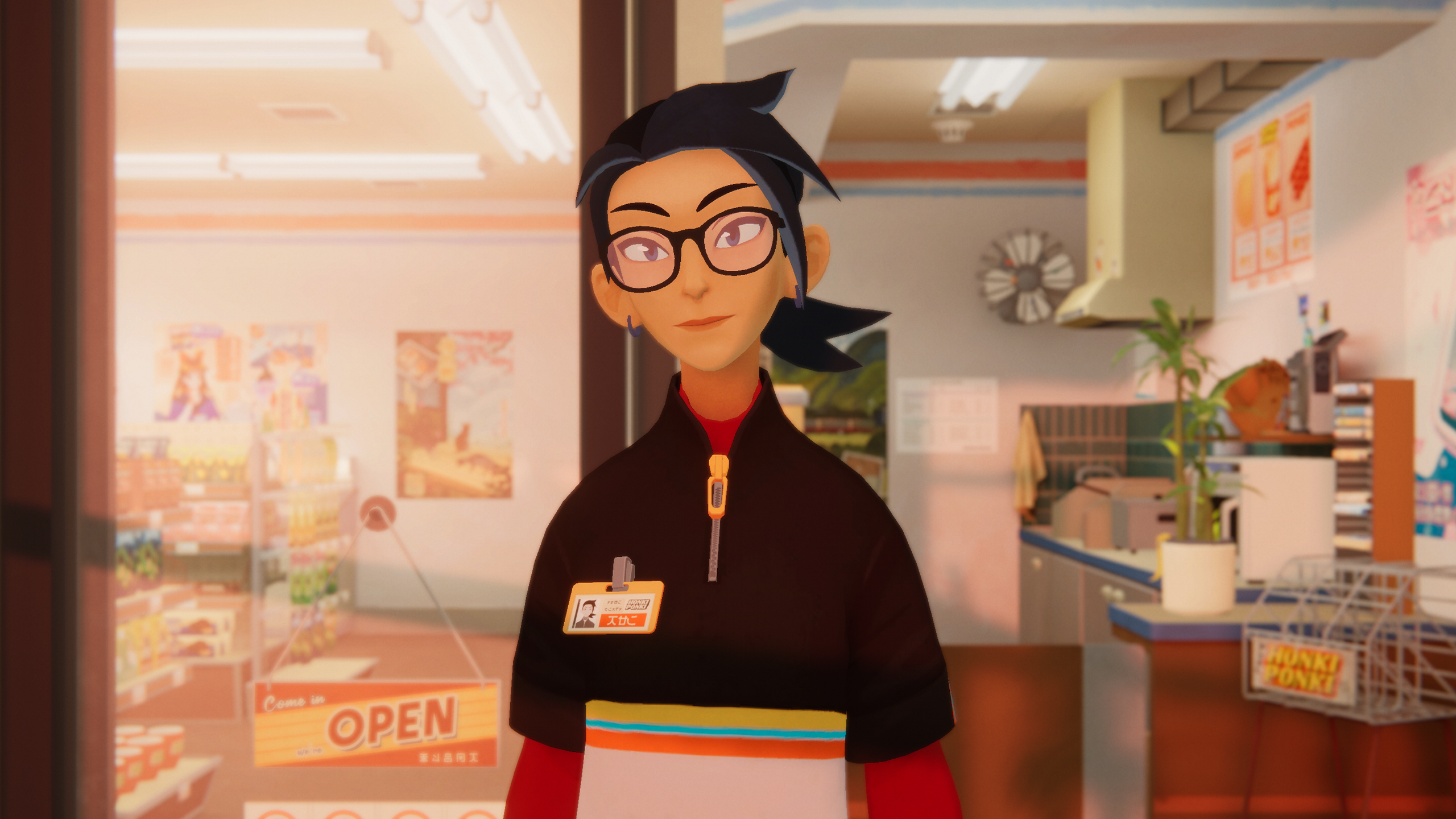
inKONBINI: One Store. Many Stories puts you behind the counter of a small-town convenience store in early-1990s Japan, working the night shift as Makoto Hayakawa, a college student helping out at her aunt’s shop for the summer. You stock shelves, scan items for customers, and slowly get to know the handful of regulars that wander in after dark. The game’s pitch is simple, and the execution is clearly made with care as the development team, Nagai Industries, a small Tokyo-based studio, describes the game as being inspired by ichi-go, ichi-e: the Japanese concept of “one time, one meeting,” the idea that each encounter is unique and unrepeatable. This philosophy comes through in every corner of the game, but the problem is that a beautiful philosophy and a $19.99 price tag are two different conversations that this game has.
First: Where The Game Shines
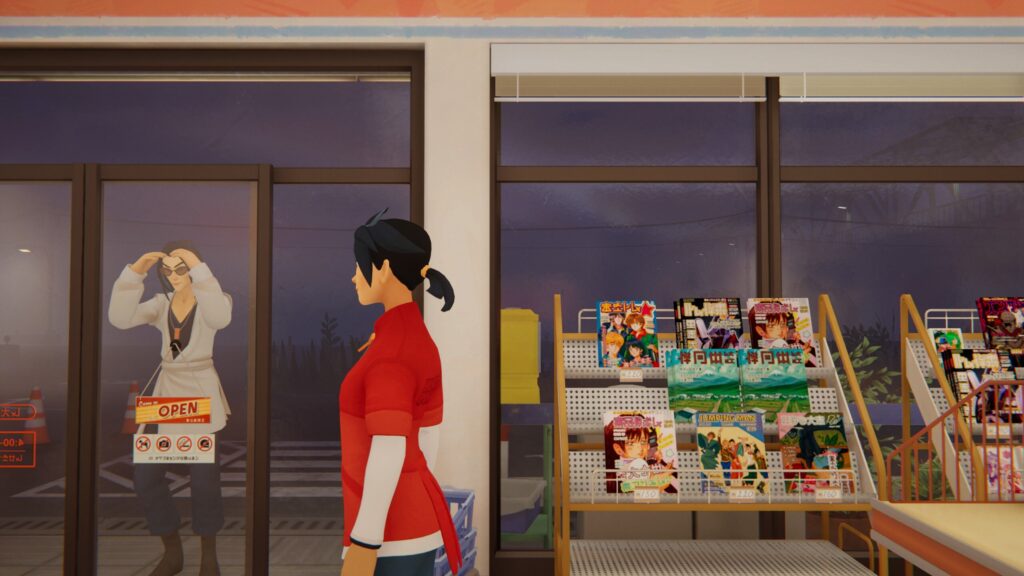
I don’t want to talk about a game like this one without talking about what I genuinely enjoyed about it. The atmosphere in inKONBINI is the real deal. It has a soft lo-fi adjacent vibe to it. It feels exactly how I expected a night shift konbini trip to feel, almost as if I was actually there. This is because of the environmental care that was put into the game. Small things are done insanely well, such as the rain audio mufflingly convincingly when the sliding doors close, and the rain getting loud when the doors are open as they would in real life. That’s a detail a lot of games tend to skip at times, and it can, in some cases, be immersion-breaking when done wrong, but inKONBINI does it justice.
The stories themselves, when they land, are genuinely touching. You can almost feel parts of yourself and stories you’ve thought about or experienced through the customers. The few recurring characters who show up over the course of the week have quiet arcs that fit the “one time, one meeting” ethos, where you’re not made to find out all the drama or know everything; you’re there to be the person you were meant to be at that moment. That might sound confusing, so think about it like a game where you’re made to be significant for the small moments you have in someone’s life, instead of being the harbinger of change for everyone. Makoto, as a protagonist, is likable and grounded, and the way she interacts with customers through branching dialogue choices gives conversations a texture that simple yes/no systems usually don’t manage.
There’s also no English dub, which is worth flagging as the game is voiced in Japanese with English subtitles. For most people playing this genre or being infatuated with Japanese culture, this isn’t a problem at all and is actually preferred, but it’s worth knowing going into it.
Where it Falls Short
The core problem I had with inKONBINI is the gap between what it presents itself as and what it actually is. On the surface, it carries the language of a konbini management game really well, with you stocking shelves, serving customers, and running a store. But you learn very early on that nothing you do carries real weight. On night two, I accidentally grabbed the wrong item for a customer. Instead of them flagging the mistake, they just accepted it anyway, despite the game even telling me this wasn’t quite what he wanted. This same customer had been standing outside staring through the glass window the entire time I was restocking, which made me expect them to at least anticipate the items they wanted a little more, due to being pressed up against the glass. Getting the item wrong and having it not matter at all deflates something I expected from the game, as I feel people would want to make sure they got the item they came in for, instead of just accepting whatever, due to being seen as a silent character.
The simulation layer is basically decorative frosting on a cake. There’s no risk of running out of stock because supplies are pre-planned for you. There’s no endless mode, no mechanical challenge to engage with, no ability to cook food for others outside of one scripted sequence; it’s all robotically planned out. The focus seems to be entirely on the story told over one week, which is a completely valid artistic choice, but it means the game is closer to a visual novel you can walk around inside of, instead of resembling anything a real management or simulation experience would offer. If you came into the game expecting a nighttime cozy Japan simulation game, you’ll feel the disconnect.
Movement was also an issue. The character moves out inexplicably slow, like slower than you’d expect from your typical laid-back game. You pick up items to restock, then spend 10-20 seconds walking to the specific shelf, getting stuck on the collision of a shelf that you probably shouldn’t even be colliding with yet, and doing all that just to put out a product or sort items into the right spot. During the times when a customer is inside the store, I had a situation where I almost sandwiched myself perfectly between the customer, the shelf, and a product I grabbed, where almost everyone got stuck in place.
Now, not that big of a concern, but when shifting from night one to night two, I had an issue where two dialogue lines started to talk over each other in a scene while the dialogue box skipped a line. It’s a bug that you hope wouldn’t happen in a game where you rely on subtitles if you’re unfamiliar with Japanese.
The Price Problem & Verdict
inKONBINI is roughly a seven-hour game with limited customer variety, no real replay incentive beyond dialogue variations, and a simulation layer that doesn’t really seem to function the best. The care went mostly into the atmosphere, the writing, and the sound design. While I appreciate those aspects, a $19.99 price tag asks a question I don’t know how to answer about what I’m actually paying for with this product.
On Game Pass, inKONBINI is an easy recommendation. As a Game Pass title, it sits comfortably alongside the kind of low-stakes, high-atmosphere experiences the service does well, and the pricing doesn’t end up seeming like an issue because if it’s not your type of game, you can just go play something else. At full price, the choice is a bit harder. The experience you’re buying is narrower than the genre presentation suggests, and the absence of an endless mode or any post-story content means the playthrough is the whole thing. My advice is that if you’re someone who is interested in this game, try the free Steam demo first, and let that make the call for you on if you want to immerse yourself in inKONBINI more, despite being a short ~7 hour experience.