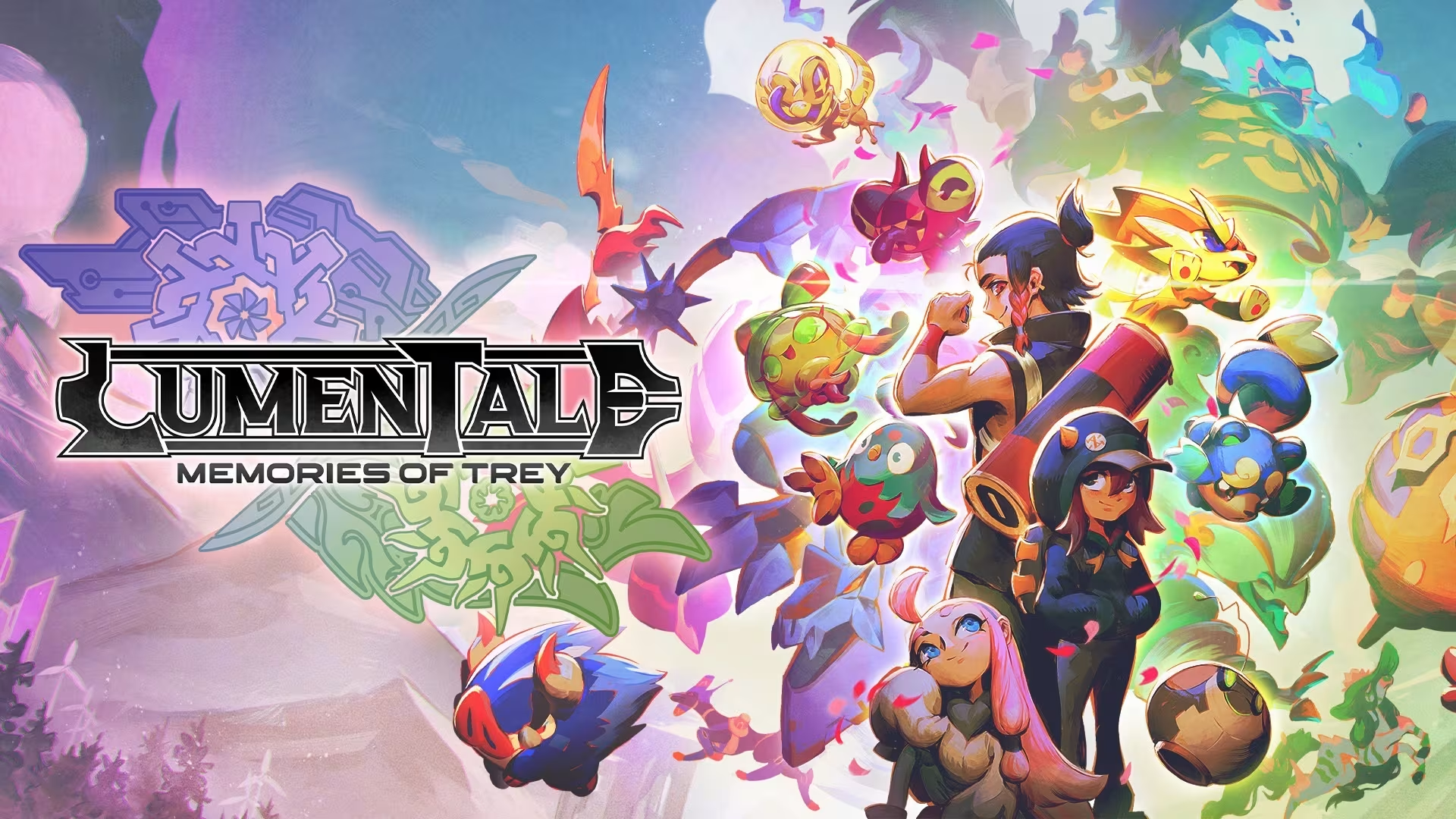
It is incredibly difficult to step into the monster-taming game genre arena without being instantly compared to Pokémon. Instead of running from that shadow, Beehive Studio leans into it with LumenTale: Memories of Trey, directly feeding into the nostalgia whilst injecting its own mechanical identity into the mix. The result is a creature collector that feels both wonderfully classic and distinctly modern, even if it has had a bumpy ride on launch.
The game kicks off with a personality test to set up your journey, a neat little psychological touch that immediately brought back fond memories of the old Pokémon Mystery Dungeon games. After that, you wake up in the world of Talea as Trey, an amnesiac. You’re going to have a lot of questions without that many answers early on, which can lead to the story feeling somewhat out-of-body at first. What I mean by this is that the story wasn’t that interesting to me. In some early parts, I felt like I was just kinda here as an afterthought in the world around me, which might be what they were going for with the whole amnesiac character design.
A Living World in 2.5D
Easily the biggest triumph of LumenTale is the visual design. The game employs a stunning clash of 2D pixel-art character sprites navigating a beautifully realized 3D world. It’s a clash that I’m very familiar with some gamers being against, but it’s one I personally love. It gives the environments an unexpected depth, and the developers clearly thought about user experience: when you walk behind a building, the structure smoothly transitions to a transparent effect so you never lose sight of Trey. This is something other games can struggle with, especially in some titles that are known to hide extra items behind houses.
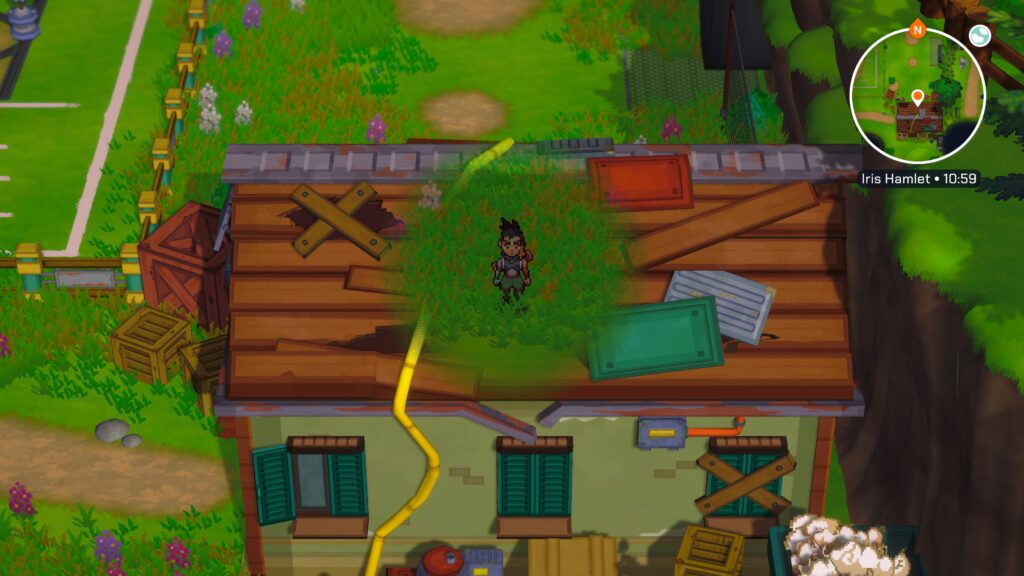
The world of Talea feels alive, channeling the same magic that made early-generation Pokémon games so absorbing. Towns are packed with NPCs going around and doing their own thing. Even if they don’t wander far from their predetermined spots, their presence makes the settlements feel populated and vibrant rather than like empty set dressing. You can go up and interact with the NPCs and see them mention something that might have been mentioned differently by another NPC in the same town.
The Grind, The Menu, and The Rhythm Game
While the exploration is smooth, the mechanical side of LumenTale can occasionally test your patience. Early in my playthrough, the game handed me a recipe and some ingredients to cook up a food item. Despite having a seemingly safe 45% chance to succeed, I somehow failed the craft all four times in a row. It’s the kind of early-game RNG that makes you wonder if you should’ve even been introduced to this mechanic yet. Typically, other games will introduce something like this, but guarantee the craft to work at least once. One cool thing the cooking/crafting system does, however, is that if you’re able to guess the recipe for an item, or if you’ve looked it up online, you can craft/cook it right away, still having the chance to make the item. If you cook an item multiple times that you don’t already know how to make VIA an in-game recipe, you do actually have the chance to learn it, allowing for quicker cooking in the future.
Fortunately, combat was much better. Battles are party-based, allowing you to field up to four Animon at once. The strategic layer is elevated by an attack menu that visually displays enemy weaknesses once you’ve scanned them, saving you from having to memorize a massive elemental chart. It plays distinctly similar to Pokémon battles but distinctly differently as well, favoring more of a turn-based system with a visible turn cycle that could lead to you getting to attack with 3 Animons before an enemy has a chance to attack once.

Outside of combat, catching Animon relies on a unique, semi-rhythm skill check system. It’s an inventive idea, but it has a frustrating design quirk: the mini-game uses the same keybinds as walking. More than once, I unintentionally failed a catch sequence instantly simply because I was trying to adjust my distance from a wild Animon right as the prompt triggered.
Luckily, catching Animon with this Rhythm system is mainly an overworld experience. If you go into a fight, get an Animon’s health down low, and then begin to catch them, you won’t have to deal with that system, making it a fair game for those who would rather ignore any extra difficulty checks and just focus on fighting to catch them all.
The Launch State Verdict
If there is a dark cloud over LumenTale, it’s the tech. Some portions of the game are currently plagued by a frustrating number of bugs, ranging from infinite loading screens to outright progression-blocking softlocks. To the developer’s credit, they have been working overtime; a handful of patches have already rolled out to smooth over the worst offenders.
Outside of the technical issues, LumenTale: Memories of Trey is a genuinely good game at its core, and I do recommend it to monster-taming fans. However, if you’re on the fence, it might be worth waiting for a sale or holding off for a few more weeks while the developers finish squashing the bugs that threaten to halt your progress. The foundation is brilliant, and I love it for giving me a rock-solid Pokémon fix on the computer, but it just needs a little more polish to truly shine.
If you are ready to jump in despite the rough edges, LumenTale: Memories of Trey is available now on PC via the Steam Store, as well as the Nintendo Switch (with full backward compatibility support on the Switch 2). You can pick it up at its standard retail price of $24.99, but if you buy it before June 9th, both platforms are running a 10% introductory discount, bringing it down to $22.49.