On paper, Wardrum sounds like a pitch that would be a little confusing to build around. You’re taking the tactical grid-based combat of a game like XCOM, which focuses on positioning, ability management, and turn-by-turn decision making, and you’re adding a rhythm game layer on top of it, where every ability you activate requires hitting timed button inputs to the beat of a drum. One of these genres demands patience and careful planning, while the other demands split-second reflexes and physical timing, like two different flavors of ice cream swirled together into one. Mopeful Games, a three-person studio from Helsinki whose previous game was a fashion-themed FPS, decided to combine them into a roguelite and publish it through Team17. Shocking, despite the differences in mechanics, it genuinely, completely works, and I’m actually in love with it.
What Wardrum Actually Is
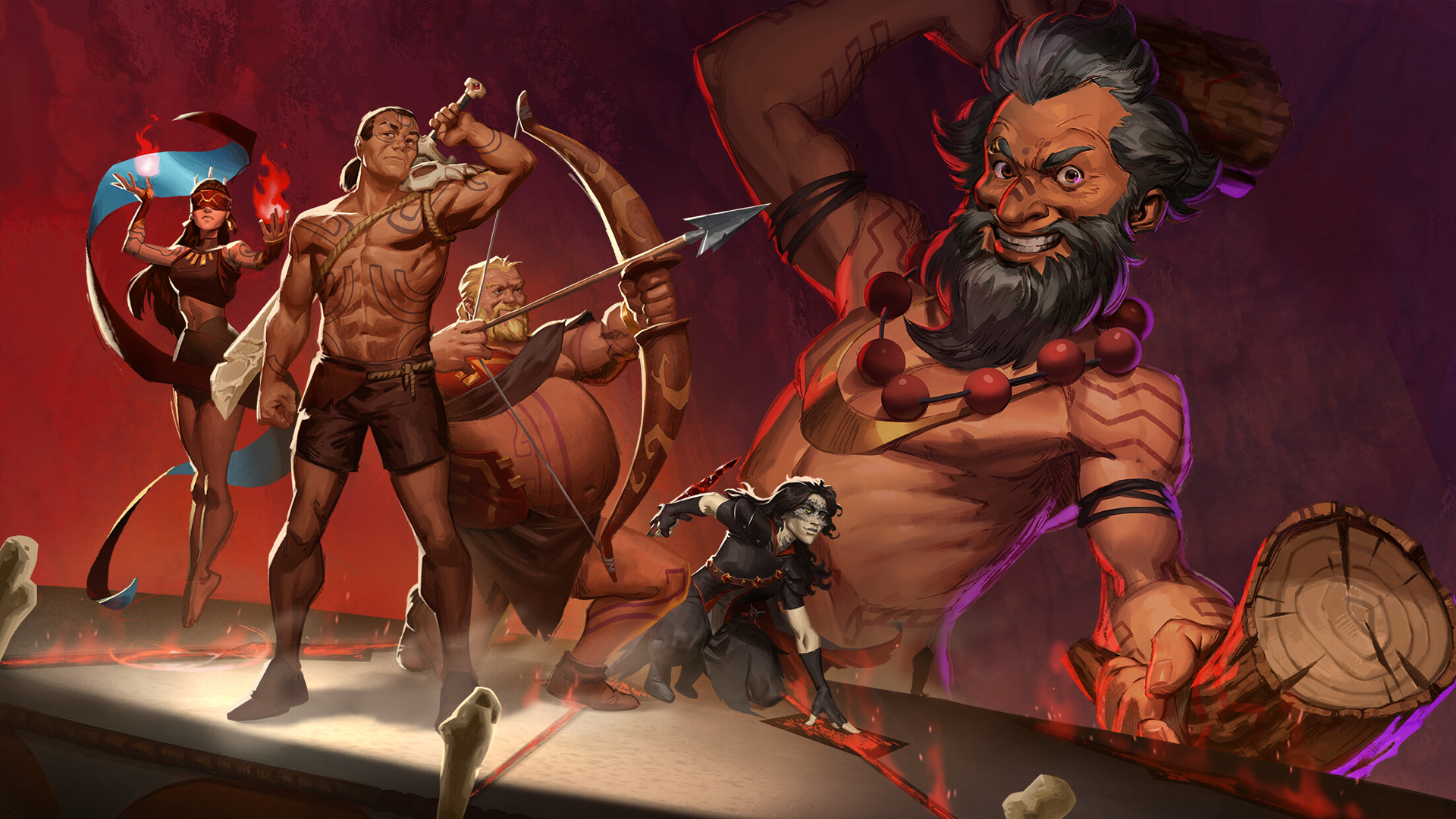
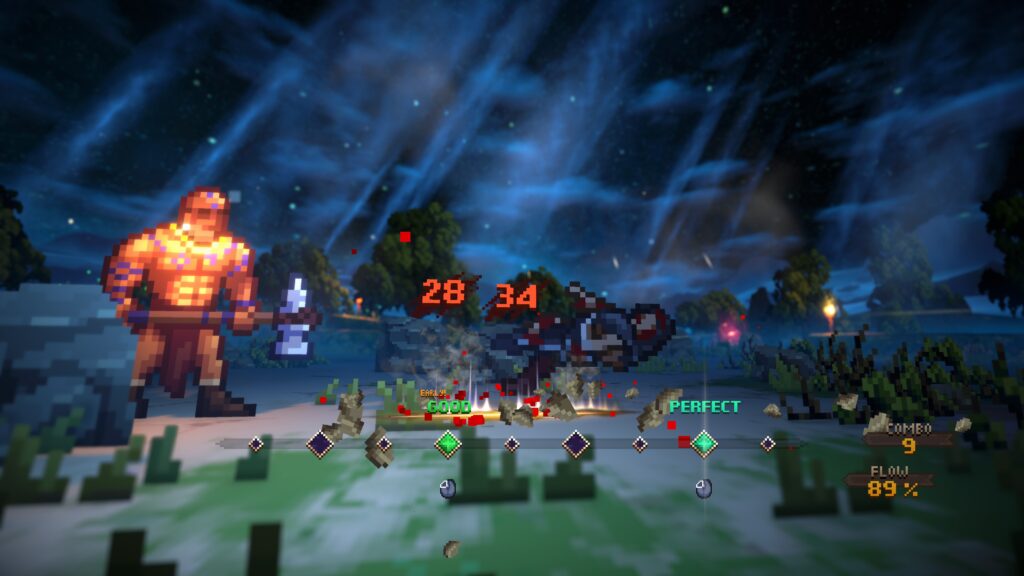
You lead a warband of five warriors through a harsh fantasy world that was corrupted by offbeat magic. You have to fight your way across six biomes to reach the source of the corruption. The combat is turn-based and grid-based, with you positioning your units, activating abilities, managing cooldowns, and using environmental hazards to your advantage. If you have played a game like XCOM or Mewgenics, this is that same DNA. What makes Wardrum completely different is that when you activate an ability, a rhythm prompt appears, and you have to hit your inputs in time with the tribal drumbeat to determine how much damage you do with an attack. Perfect timing can give you a powerful attack, while off-beat inputs deal reduced damage or partial buffs.
The result of this system is a game where planning a tactical turn is only half the battle. You also have to execute the attacks with your skill, changing the outcome. It turns the quiet deliberation of a turn-based game into something with physical stakes, and it adds a layer of tension to routine decisions that the genre usually lacks. Deciding to use an ability isn’t just based on resources or your nearby allies/enemies, but also about how confident you are in getting the timing right.
Debuffs Are Actually Fun
The debuff system in Wardrum honestly surprised me the most. In most tactics-based games, a debuff such as confusion will change how you move. Attacks could miss, you might walk the opposite way from where you intended, or you might even be forced by the game into attacking an ally. In Wardrum, this type of debuff affects your rhythm inputs instead. Instead of being confused by movement, the inputs for attacks will be randomized, so instead of having to right-click for an attack, maybe you have to press Z and then hold down the space bar. It’s a new type of depth that at first feels a bit foreign due to how standardized debuffs have been in the past, but when you learn how this game handles it, it honestly adds a charm that no other game has and makes me appreciate the experience more.
Some debuffs can create interesting situations that honestly feel more like buffs than they do debuffs. The Slowed debuff, for example, actually makes it easier to hit perfects since the timing window opens up due to the rhythm beat being slowed down. So a debuff that should be seen as a punishment can occasionally feel like a mild advantage depending on the situation. Despite how switched all the mechanics are for buffs and debuffs, it has only added fun rather than frustration for me, but it would be interesting to see toggles in the future that allow you to add layers of depth to debuffs for a more punishing experience.
The Paths System and Events
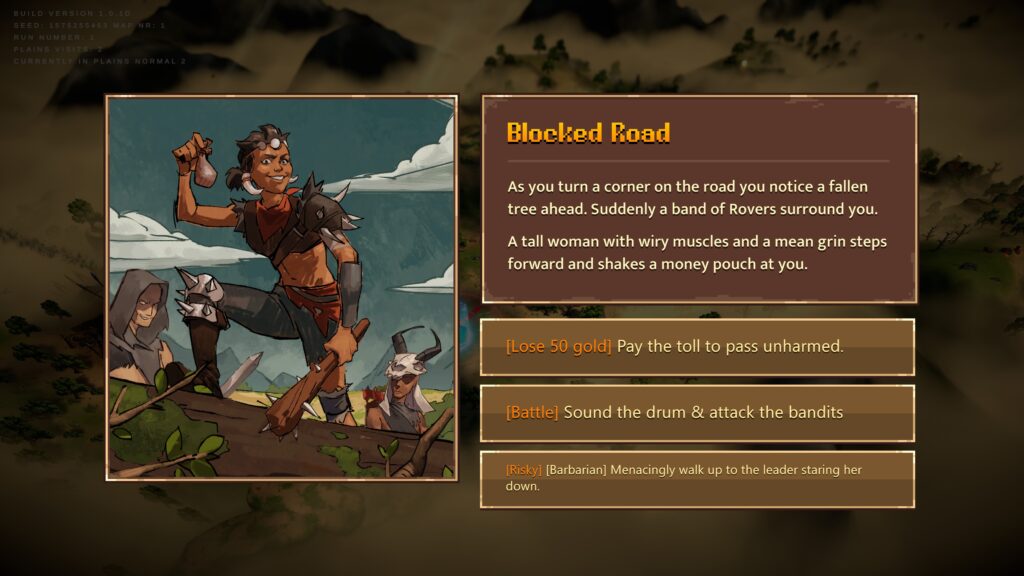
Between combat encounters, you navigate a branching map much like you would in games like Slay the Spire, with you picking your path through events, sanctuaries, shops, and fights. These paths can have random events, such as the one I got where a blocked road gave me three options: Lose 50 gold to pass by, fight through the enemies, or attempt to stare down the leader. Confident in my first run, I chose to do the battle. It’s a choice-making mechanic that is natural for this type of branching path game, but adds a bit of depth that can make the world feel a bit more alive, giving options a different set of risks and rewards based on your best judgment.
Accessibility and Difficulty
Wardrum handles difficulty in a smart way. The rhythm difficulty setting changes how precise your timing needs to be: Easy mode compensates for inputs a lot more, which means people who have never touched a rhythm game in their life can still engage with the combat without worrying too much about timing. The tactical strategy remains intact regardless of what you select, as you’re still positioning, managing abilities, and making decisions, with the rhythm system just getting more forgiving based on this option.
That said, Easy felt too easy for anyone with rhythm game experience, even if you weren’t the best at it. The gap between Easy and Normal is noticeable, and there’s room for a harder mode sitting between Normal and the point where inputs start feeling genuinely demanding. Some ability combinations are also far more forgiving than others, as certain combos can be hit almost on autopilot if you’re used to the genre, while others have fast sequences that actually test you. The skill ceiling is there; it just isn’t always consistent about where it appears, but it makes sense to have weaker skills require easier inputs.
Small Things Worth Knowing
The pixel font used in menus can be hard to read in certain contexts, and squinting at item descriptions in the heat of a run isn’t ideal, but there’s an option in the settings to disable the pixel font and switch to something more readable. It’s a thoughtful accessibility inclusion that a lot of games skip entirely. The music fits the tribal, fantasy atmosphere of the world well and holds up across runs without becoming grating, something that is very important for a game focused on music as a structural pillar.
In Conclusion, Wardrum is one of the most surprising games I’ve had the joy of playing this year so far. It’s a combination that sounds weird on paper but feels completely right in practice. Whether you’re a tactics fan who’s never touched a rhythm game or a rhythm game player who never tried a game like XCOM, there’s something here for you, and it might even unlock a new genre for you to enjoy. Three people made this, so with a price tag of $19.99 with a 20% launch discount, it’s an easy recommendation for anyone.